Jan 8, 2026
The most important role we don’t talk about
As a business owner, I cannot recall a time where I ever imagined “caregiver” would become my most important role. Now I find myself in the all-important caregiving role – but for me it’s on the opposite end of life’s spectrum. To say it bluntly, dementia has become my part-time job (full-time, depending on the week).
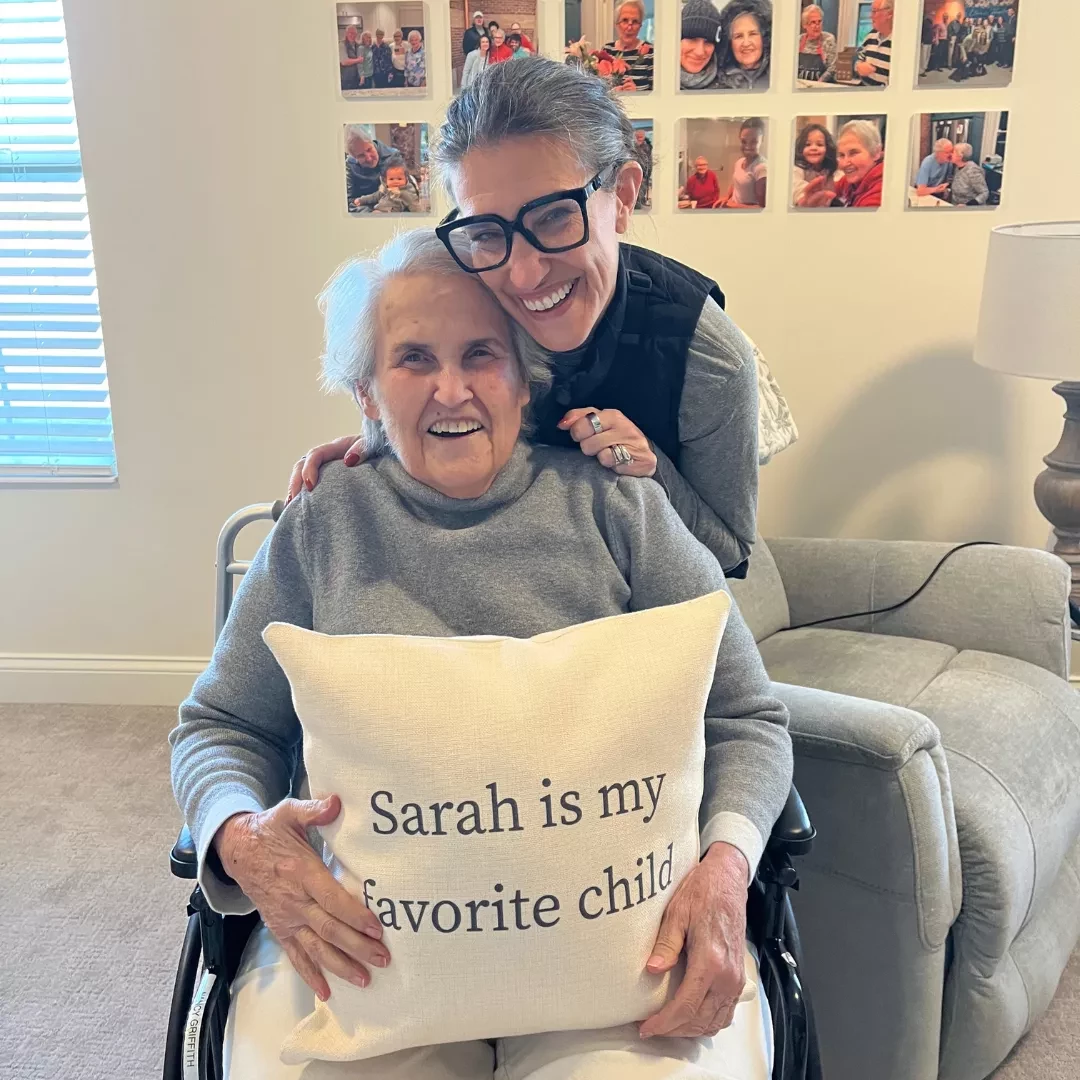
My mom was diagnosed with dementia about 10 years ago. She was my superhero and single-handedly raised my brother and I after my father died in a tragic accident. I have been relatively private about her diagnosis, but over these past ten years I’ve learned many things. The first of which is that so many in my close circle and beyond are dealing with dementia or other significant issues with aging parents.
No one ever tells you about aging parents and the caregiving that is needed. They changed your diapers…and now you’re changing theirs. It’s heartbreaking, but it’s also beautiful to be able to be there for my mom and walk with her through these years, along with my amazing stepfather and my brother.
Nearly a year ago, we made the decision to move mom to a memory care facility (The Cotter House in Worthington). I anguished over it with my stepfather. I cried more than I have in my adult life. I prayed constantly for her to have a good transition and to find a BFF (both of which have happened – God is good!).
As a small business owner, wife, stepmom, soon-to-be grandma, mentor and friend, navigating this season has been extremely challenging. Here are some things I’ve learned:
- Tap your community for help. I’ve found that friends and family want to help however they can. Let them! If I’m going out of town and can’t visit on the daily, mom’s sisters and brother will happily visit her; my husband will clean up the house and order dinner when I’ve had a hard day dealing with mom; and the Irvin PR team easily covers me if I have to go to a doctor’s appointment or leave early to tend to her.
- Give yourself grace. This is a hard season. I used to work late into the evening to stay on top of everything. When dementia came knocking, I quickly found I don’t have the bandwidth for that anymore and it’s fine. At work, I work hard. There will always be an email that needs to be sent and something that needs to be done. I’m just learning to do that in the daytime hours, which is hard for this (former?) workaholic.
- Be selective. My new schedule of visiting mom at the Cotter House every other day has put the brakes on much of my social life – especially for someone who routinely double (or triple!) booked herself every night. I now only have Tuesdays or Thursdays to get together with friends as I save the weekend for my hubby. I found that I was just slotting people in and booking out for months and was exhausted with no downtime. I have now implemented a free night at home just for me each week and the other night is designated for those friends who fill my cup.
- Delegate. I am blessed to have an incredible team that, most times, can do the job better than I can. Yet, I still have a hard time delegating things as I don’t want to trouble anyone. I’ve had to reframe this thinking to understand that when I delegate something, it’s an opportunity for my team members to learn or hone a new skill, or simply grow their own confidence.
- Gain perspective. Previously, every project and every client situation felt like a high-stakes game of diplomacy and a need for flawless implementation. We’ll always give our best effort, but I’m realizing this: months from now, what we thought was urgent was just daily work and part of the job. Our work is important, but it doesn’t have life or death consequences attached. My time with my mom is limited, and the disease is accelerating that timeline. My presence and my most important work are no longer what I once thought they were – at least not in this season of life. That’s the perspective I needed to grasp.
- Find joy. One of the most important lessons I’ve learned is that there’s always joy even in the long, miserable slog that is dementia. Joy is always available and can be found in the smallest things – when we listen to Perry Como (mom’s favorite!) and she sings, when I say “smile mom!” and she reflexively smiles the sweetest smile, when she yells at me for being too bossy while playing bingo. I love to bring joy to not just mom, but to the other memory care residents and their loved ones and the aides. I feel like it’s my ministry to love on them and bring a smile where I can.
I absolutely realize that I have flexibility as a business owner, a team to delegate things to, an incredible family and friends who all love me and are helpful. I realize these luxuries are not available to many people who are dealing with this disease. However, the items bulleted above certainly are available to most – it’s just a matter of tapping into them.
We need more open discussion about our newly-found roles as caregivers – and a broader understanding and acceptance of what caregiving looks like today, and how the need might come calling in the prime of our working lives.
I know firsthand how this is tapping my mental, emotional and physical energy in ways I couldn’t anticipate. As employers, coworkers and close-knit colleagues, we need to prepare ourselves and our team for the real shifts as we step into this unspoken role we never asked for.
I liken it to crisis communications – we certainly don’t want a crisis to occur; however, we do need to have a thoughtful and adaptable framework in place, built around honest dialogue and ways forward so we can help each other through these most difficult of times. The stakes are far too personal and important to ignore. I’m grateful for my team who has been so understanding as I’ve learned this on the fly.
I know many of you are going through this season – whether it be dementia or other parental health issues – I’m curious about what has helped you most to navigate it?